
-

- 11th Jun, 2026 21:02 pm
- Climate Change
- 150 views
The Ground Beneath Growth: Why Soil Health Matters in Climate-Smart Agriculture
Healthy soils are the foundation of productive and resilient farming. Discover how soil testing helps farmers make informed decisions, improve yields, and adapt to the challenges of a changing climate.
When people think about farming, they often think about seeds, rainfall, fertilizers, or harvests.
Rarely do they think first about the soil.
Yet every successful harvest begins beneath the surface.
The health of the soil determines how well crops grow, how efficiently plants absorb nutrients, how much water can be retained during dry periods, and ultimately how productive a farm will be. For farmers facing the realities of climate change, understanding soil conditions is no longer optional it is essential.
The Hidden Story Beneath Our Feet
Soil is much more than dirt. It is a living system that contains nutrients, microorganisms, organic matter, water, and air. Together, these elements create the conditions crops need to thrive.
However, not all soils are the same.
Some soils may be too acidic, making it difficult for plants to absorb essential nutrients. Others may have low fertility levels, limiting crop growth even when rainfall is adequate. In some cases, poor soil structure reduces water retention, increasing vulnerability during dry spells.
Without understanding these conditions, farmers may apply the wrong inputs, invest in unsuitable crops, or struggle to achieve the yields they expect.
This is where soil testing becomes valuable.
What Soil Testing Reveals
Soil testing provides critical information about the condition of farmland. It helps farmers understand:
- Soil pH levels (acidity or alkalinity)
- Nutrient availability
- Organic matter content
- Soil fertility status
- Moisture retention capacity
- Potential limitations affecting crop performance
Armed with this information, farmers can make informed decisions about what to plant, how to manage their fields, and which soil improvement practices are most appropriate.
Rather than relying on assumptions, they can rely on evidence.
Building Climate Resilience Through Better Soil Management


Climate change is creating new challenges for farmers across northern Ghana and many other parts of Africa.
Rainfall patterns have become less predictable. Dry spells are becoming longer. Extreme weather events are placing greater pressure on agricultural systems.
Healthy soils play a critical role in helping farmers adapt.
Soils with higher organic matter can retain moisture for longer periods, helping crops withstand temporary drought conditions. Well-managed soils also support stronger root development, better nutrient uptake, and improved productivity.
In many cases, improving soil health is one of the most cost-effective climate adaptation strategies available to smallholder farmers.


Learning from Farmers, Learning with Farmers
At Diva Fam, we believe that effective agricultural development combines scientific knowledge with farmers lived experience.
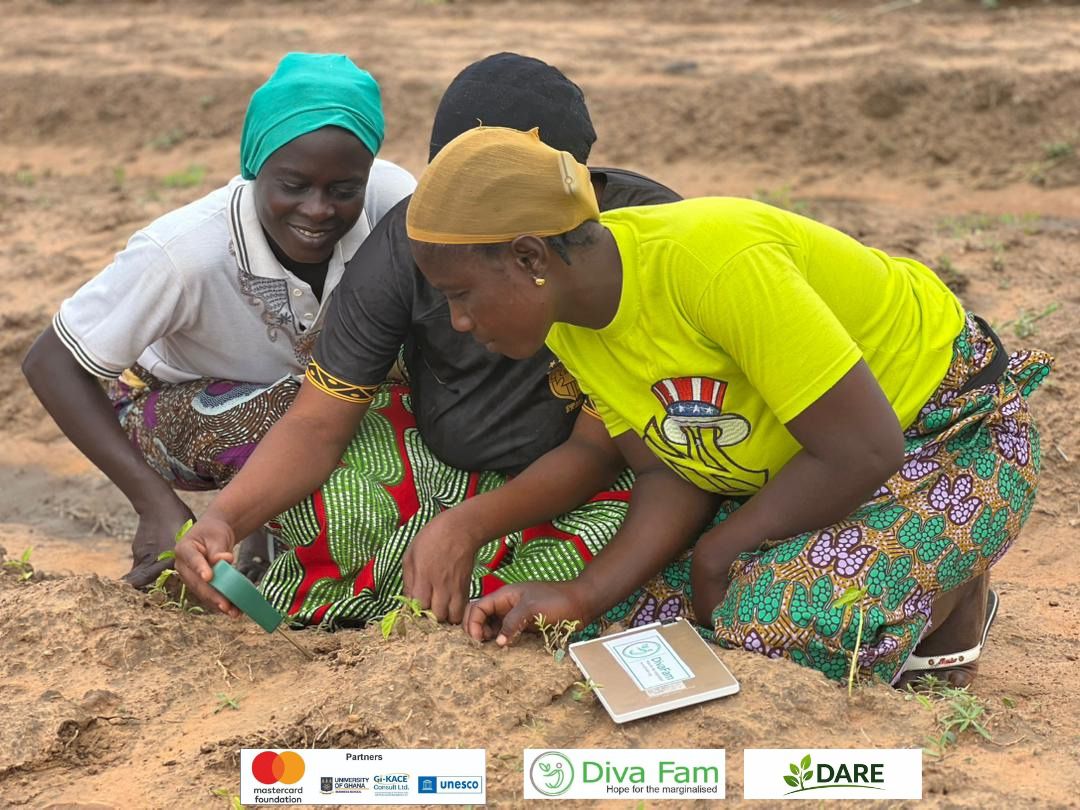
During our recent Climate-Smart Agriculture training sessions, women farmers explored key concepts including soil moisture, fertility, pH, acidity, and alkalinity. These discussions created opportunities to connect technical information with observations farmers have gathered from years of working their land.
The goal is not simply to introduce new information.
It is to help farmers understand why certain practices work, how soil conditions affect crop performance, and what actions can strengthen productivity while protecting the long-term health of their land.
When farmers understand their soil, they gain greater control over their agricultural decisions.
Investing in the Future of Farming
Food security begins with healthy soils.
Sustainable livelihoods depend on productive farmland.
Climate resilience requires farming systems that can adapt to changing conditions.
All of these goals are connected to what happens beneath our feet.
As communities continue to face environmental and economic challenges, soil testing offers a practical pathway toward more informed farming, improved productivity, and greater resilience.
The future of agriculture is not only about what we plant.
It is also about understanding the ground that makes growth possible.
At Diva Fam, we remain committed to supporting farmers with the knowledge, skills, and tools needed to build sustainable agricultural systems that work for both people and the planet.
Abdul-Hafiz Wuninsu
I am a software developer and ICT facilitator passionate about building impactful technology solutions for education, youth empowerment, and digital innovation in Africa.
to comment login Or continue with:
Leave a Comment